
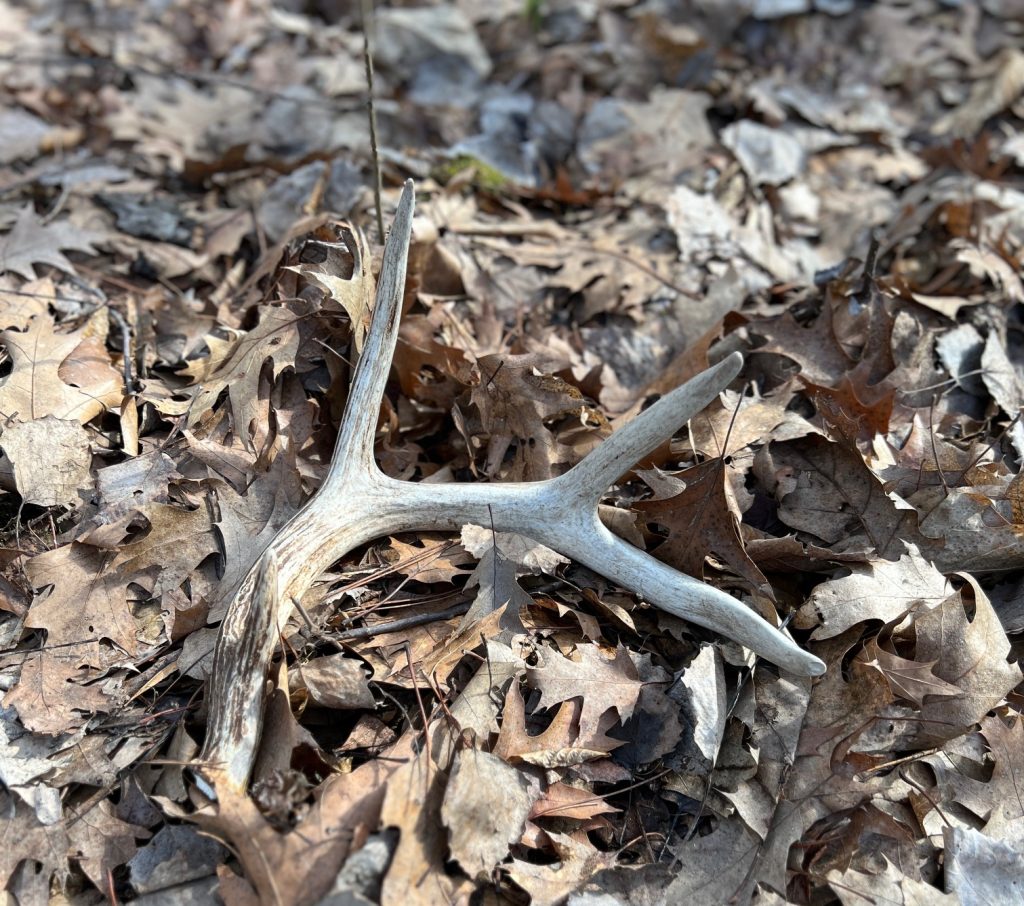
As winter transitions into spring, one of the most exciting activities for hunters and outdoor enthusiasts alike is the search for whitetail antler sheds. Shed hunting not only offers a thrilling adventure but also provides valuable insights into the movements and behaviors of these elusive creatures. To maximize your chances of finding these prized trophies, it’s essential to focus on specific areas where deer frequent during the winter months. Here’s a guide to prime locations for finding antler sheds:
Winter Food Sources:
During the harsh winter months, whitetail deer concentrate around food sources to sustain themselves. Look for areas rich in food such as agricultural fields (corn, soybeans, brassicas), orchards, and dense stands of browse like the tops of a freshly cut logging area. Stands of honeysuckle, cedar, and dogwood are also hot spots to locate. Pay close attention to feeding patterns and trails leading to and from these food sources. When deer drop their antlers, they often do so while foraging, making these areas prime locations for shed hunting.
Winter Bedding Areas:
Deer seek out sheltered and secluded spots for bedding during the winter to protect themselves from the elements. Thickets, conifer stands, and south-facing slopes which provide warmth and cover, making them ideal winter bedding areas. Concentrate your search around these locations, paying attention to areas with dense vegetation and soft bedding material such as tall grass or leaves. Deer often drop their antlers while bedding down or getting up, making these spots fruitful for shed hunters.
Funnels:
Funnels are natural or man-made features that funnel deer movement into specific corridors. These can include ridgelines, creek bottoms, and narrow valleys. Funnels naturally concentrate deer traffic, increasing the likelihood of finding shed antlers along these routes. Look for signs of deer activity such as tracks, trails, and rubs. Focus your search efforts in these high-traffic areas. Deer may inadvertently drop their antlers while navigating these tight passages, providing shed hunters with ample opportunities for success.
Crossings:
Deer are creatures of habit and often follow established routes when moving through their habitat. Look for natural crossings such as creek crossings and fence lines. These crossings serve as strategic points for shed hunting as deer frequently drop their antlers while jumping fences or crossing obstacles. Pay attention to signs of wear and tear on fences, tracks leading to and from crossing points, and areas where deer may pause or hesitate before crossing. These locations offer excellent opportunities for shed hunters to uncover hidden treasures.
Successful shed hunting requires a combination of patience, persistence, and knowledge of whitetail deer behavior. By focusing your efforts on winter food sources, bedding areas, funnels, and crossings, you can significantly increase your chances of finding whitetail antler sheds. Remember to respect wildlife and their habitats while shed hunting, and always obtain proper permission when accessing private land. Best of luck and happy hunting!